We Follow The Physics and Data to Find The Root Cause

Metallurgy, chemistry, electromagnetics, thermodynamics - applied as a forensic toolkit. Not just what failed, but why.

Request a Technical Briefing →
HOW GENEREX APPROACHES ROOT CAUSE ANALYSIS

Observations Produce Data. Science Drives Conclusions

01

Evidence Collection

DCS historical trends. Operator logs, alarm histories, maintenance records. Physical samples of contamination. Visual inspection, documented photographically.

02

Laboratory Analysis

Contamination samples analyzed chemically. Specific signatures reveal specific mechanisms-silicates point to mica abrasion, iron oxide to a loose stator core, lead carbonate to a hydrogen cooler leak. Established, documented, reproducible.

03

Physics-based Reasoning

Every candidate explanation tested against the evidence. Explanations that cannot survive the evidence are discarded. What remains is the cause.

04

Reporting & Recommendation

Written report. Evidence chain, analysis, conclusion, corrective action. Built to hold up under regulatory, insurance, or internal engineering review.

What the Engagement Includes

Scope of a Root Cause
Analysis Engagement

Evidence Collection

  • On-site inspection and photographic documentation
  • DCS historical trend review and forensic data analysis
  • Sample collection of deposits and materials of interest
  • Interviews with operators, maintenance staff, and prior inspectors

Laboratory and Technical Analysis

  • Laboratory coordination for chemical and metallurgical analysis
  • Specialized diagnostic testing - partial discharge, flux probe, M4100 tangent delta, fiberoptic vibration
  • Cross-reference against similar failure modes in Generex project history

Reporting and Guidance

  • Written root cause report with documented evidence chain
  • Corrective action recommendations with supporting rationale
  • Support for subsequent review by regulators, insurers, or internal teams
Technical Capability

Thirty Years of Pattern Recognition across every Major Failure Mechanism

Across 286 generating units on five continents, essentially every category of generator failure has come through Generex's case file. The advantage of pattern recognition built over thirty years is that the next failure rarely looks like a first encounter — it looks like one of a known set of mechanisms with known signatures.
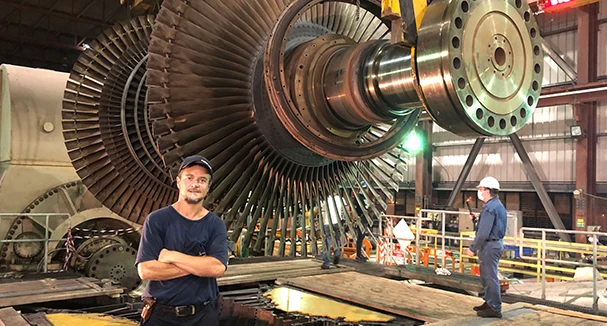
Forced Outage Support

Failure Mechanisms Investigated

Rotor thermal sensitivity. Shorted rotor turns. Mechanical imbalance. Loose stator core and belly band resonance. Winding insulation degradation. Mica insulation abrasion. Hydrogen cooler leaks. Collector ring contamination. Diode wheel failures. Field ground events. Excitation control failures.

Diagnostic Certifications

Siemens Fiberoptic Vibration Sensor Training. Siemens Generator Specialist Program. GE Excitation and LCI Program. GE Generator Specialist Program. AGT Services Advanced Generator Training. Doble Engineering partial discharge and M4100 tangent delta testing.

Chemical Signatures in Forensic Samples

Silicates indicate abraded mica insulation. Iron oxide flags loose stator core. Lead carbonate indicates hydrogen cooler leaks. Greasing on stator components signals loose blocking and tie failures. Each signature corresponds to a specific, well-understood mechanism.

Engage Generex for a
Root Cause Analysis

A short briefing is usually enough to scope the work — whether you need a focused desk review, full on-site evidence collection, or a formal report for external review. If a formal engagement is warranted, scoping follows immediately.