Once the Cause is Known.
The Question Becomes Speed.

Parts sourced through three decades of industry partnerships. Repairs supervised on the turbine deck. Days, not months.

Initiate a Recovery Assessment →
The Strategy

The Smoking Gun is Found.
What Happens Next?

Most generator parts are unit-specific. They are not sitting on a shelf anywhere in the world—not at an OEM warehouse, not at a competitor, not in any spare-parts catalog you can phone in.

The typical OEM quote for a custom component carries an eight-to-twelve-week lead time. When your unit is losing up to a million dollars a day, that quote is not a solution—it is the problem in a different envelope.

Three decades of direct relationships with parts manufacturers, repair shops, and reverse-engineering specialists put parts on your turbine deck in days rather than months. Not procurement power—handshake trust, built one engagement at a time.

"When a unit is down, the facility is losing revenue by the minute. No one should have to wait twelve weeks on an OEM lead time when the same part can be delivered through an established channel in days."

Charles J. Wolfe

RECOVERY APPRAISAL | RECOVERY PLANNING

A Recovery Plan is a Sequence,
Not a Shopping List

01

Specification and Sourcing

  • Every part identified with precision—specification drawing, material tolerance, and the right vendor for the job. Routed through procurement. Custom-machined orders placed with lead time measured in days.
02

Reverse Engineering when Required

  • For heritage machines where OEM support is gone, geometry is captured from the failed original. Geometry, materials, tolerances, and component properties all documented for a drop-in replacement.
03

Sequencing and Critical Path

  • Interdependent parts, repairs, inspections, and tests sequenced explicitly. Critical path identified. Parallel work mapped. Decision points flagged before execution begins.
04

Repair Supervision and Return to Service

  • One supervisor on-site throughout. Post-repair testing validates the restored system. Only when performance is proven does Charles sign off on grid synchronization.
WHAT THE ENGAGEMENT INCLUDES

Scope of a Recovery
Planning Engagement

Specification and Sourcing

  • Detailed parts and tools specification and lists
  • Sourcing through verified vendors with OEM support if required
  • Control over the procurement and logistics process

Sequencing and Planning

  • Written sequence and synchronization scheduling
  • Modern work trackers for technical execution
  • Step-by-step technical activity sequence
  • Real-time reporting and communications

Execution and Return to Service

  • Direct supervision of technical team and work
  • Testing and commissioning return to service sign-off
  • Final sign-off by all parties
  • Clean-out documentation
TECHNICAL CAPABILITY

What Makes Fast Recoveries Possible
Forced Outage Support

Industry Partnerships

Relationships built engagement by engagement over three decades. Every vendor in the network has been tested under real recovery conditions—not evaluated from a catalog. When a part is needed, the call goes to someone who already knows the specification.

Reverse Engineering

For machines where OEM support has ended—Brown Boveri, legacy Westinghouse, Electric Machinery, and others—Generex produces drop-in replacements from the failed original. Full dimensional capture, material analysis, and tolerance documentation included.

Machine Coverage

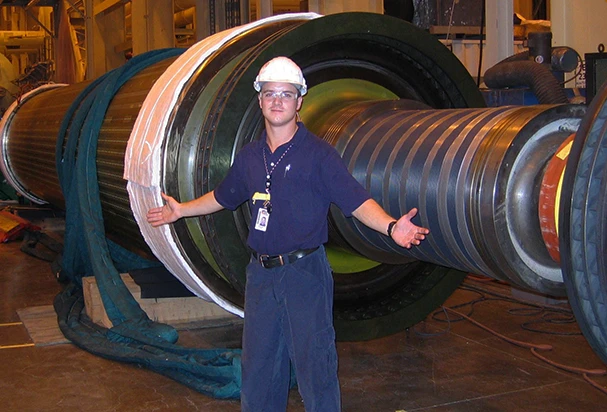
Whether it’s small combustion generation units to the largest hydroelectric and nuclear equipment, Generex works with all major OEM platforms, having maintained service and performance standards through decades of real-world testing and forensics.

Engage Generex for a Recovery Assessment

A short conversation scopes the recovery, identifies critical-path constraints, and establishes what Generex can realistically deliver and on what timeline—whether the work is parts sourcing only, full reverse-engineering, or end-to-end recovery supervision through return to service.