CASE STUDY

Spurious Stator Phase Resistance Investigation & High-Resistance Joint Repair on Westinghouse Generator

Overview

During a major outage on a Westinghouse WESTAC air-cooled gas turbine-driven generator, routine testing revealed suspicious and inconsistent stator phase resistance readings. Infrared scanning showed elevated temperatures at multiple phase joints, raising concerns about potential high-impedance connections or broken strands. What began as a simple verification test quickly evolved into a full-scale investigation and repair of critical bolted joints in the stator winding.
Overview
Overview
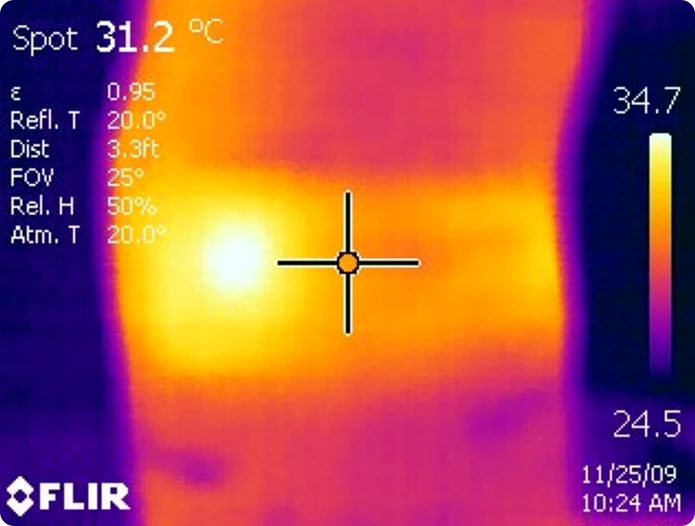
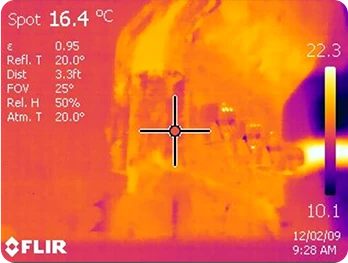
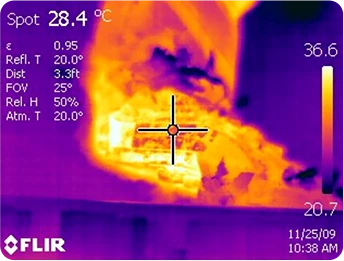
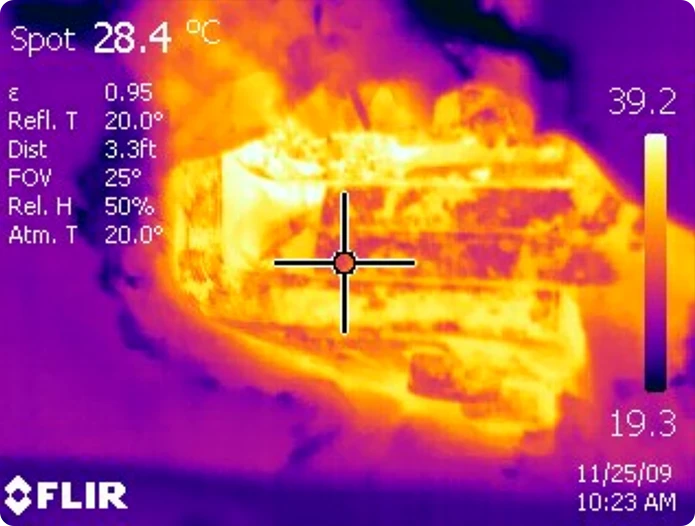
Infrared scan identified T2 joint as the hottest of all six. L: As-found, R: Stripped
Overview
Overview
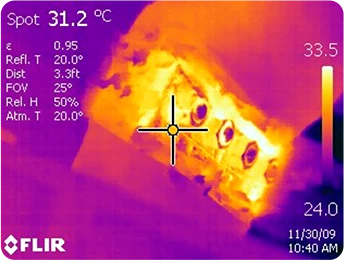
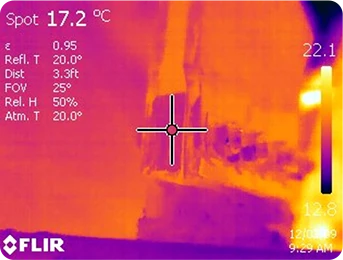
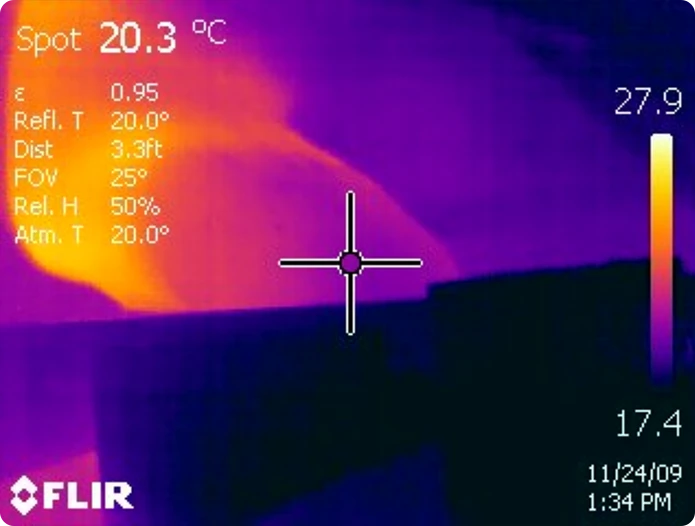
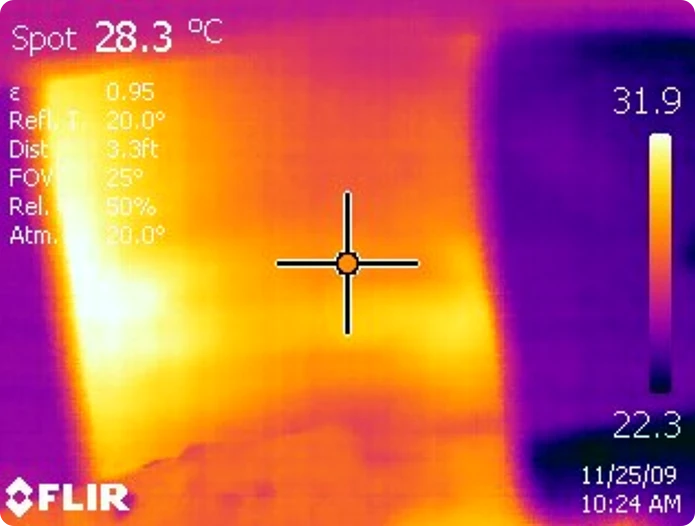
T1 (L) and T3 (R) hot spots suggested similar issue as T2 experienced
The Challenge

What was supposed to have been a routine three-day test & inspect job turned into a three week science project. We applied some solid detective work to get around the three DLRO test sets all kicking back with data that changes every time you go back to verify it. The resistance values were random, indicating a deeper problem in the generator. We ultimately got to the bottom of it, repaired the windings, and got it back up in running in just 2.5 weeks.

Investigation and Discovery

A systematic, multi-method approach was used to validate the problem:

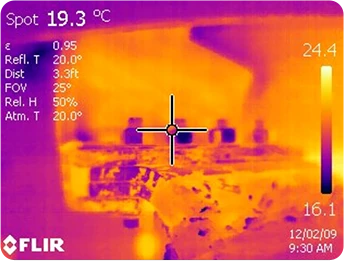
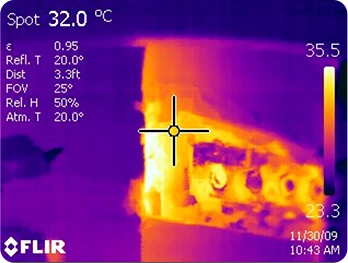
Thermography clearly identified hot spots at all six phase-to-ring bolted joints (T1 through T6). Further disassembly of the T2 joint revealed severe degradation: melted copper, missing or poor silver plating, resin runs interfering with contact surfaces, and significant gaps in the lap joints. Local micro-ohm measurements confirmed one side of the T2 joint measured 619 μΩ while the mating surface was only 84 μΩ — a clear indication of impending failure. Infrared scan identified T2 joint as the hottest of all six.

Infrared Scans of the T1-T2-T3 Bolted Joints—Before (L) & After (R) Repairs

Overview
Overview
T-1 Joint is cooler than the surrounding copper after Repairs
Overview
Overview
T-2 Joint is cooler than the surrounding copper after repairs
Overview
Overview
T-3 Joint is cooler than the surrounding copper after repairs
Overview

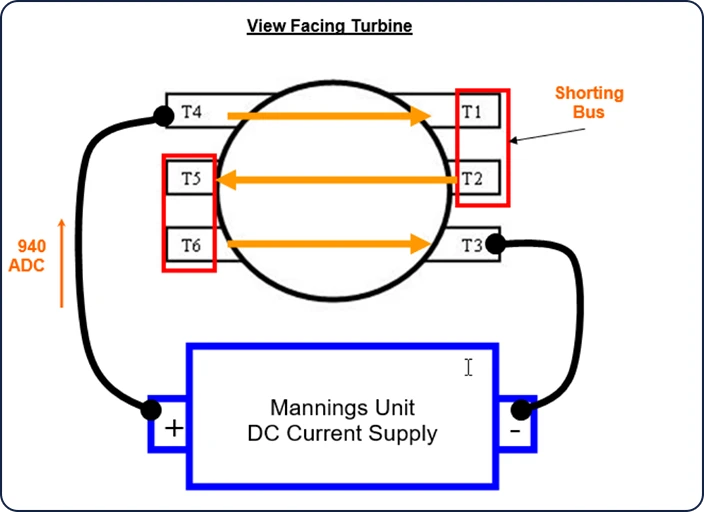
Schematic of the stator ‘heat-run’ current path

A detailed repair scope was executed using a high-current dryout unit (1,350 Amps DC) supplied by Mannings. All three phases were connected in series via custom 3” x 0.75” copper bus bars. The full repair sequence included:

  • Detailed thermography surveys at increasing current levels.
  • Controlled stripping of insulation at suspect joints.
  • Local DLRO testing across individual lap joints.
  • Removal of terminal stubs and thorough cleaning of mating surfaces.
  • Silver-plating of contact surfaces.
  • Reassembly with new stainless steel hardware and Belleville washers, torqued to 40 lb-ft.
  • Overnight settling and re-torquing with lock tabs.
  • Re-taping with 17 layers of mica tape plus outer fiberglass layer.
  • Final thermography, phase resistance testing, DC leakage, and 26 kVDC Hi-Pot verification.

Results and Customer Impact

Post-repair testing showed dramatic improvement: phase resistance values became highly consistent and repeatable, with all joints now running cooler than the surrounding copper. Thermography confirmed significantly reduced temperature differentials across the repaired connections. The unit successfully passed final electrical testing and was returned to service with restored confidence in the stator winding integrity. The customer received a complete technical report, including the original hand-sketch of the current injection setup, detailed test data, thermographic images (before/after), and step-by-step repair documentation for future reference.

Key Takeaways

This project exemplified Generex’s commitment to technical excellence and INTEGRITY — delivering a complete, honest diagnosis and lasting repair solution that protected the customer’s multi-million-dollar asset.