CASE STUDY
Emergency Rotor Collector Ring Investigation & Repair on Alstom Gas Turbine a European Oil Company Basra Power Station, Iraq
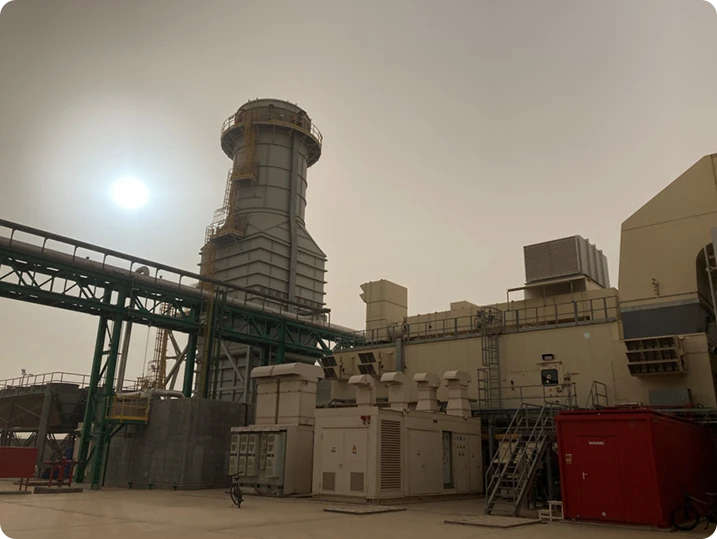
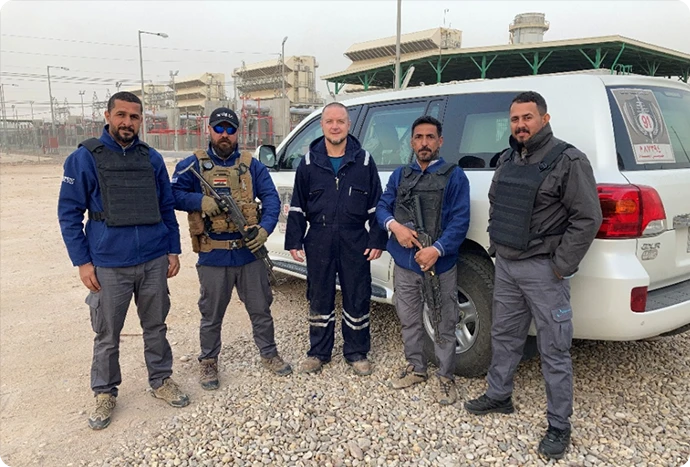 My Armed Escort Team
In a high-stakes deployment to Basra, Iraq, I was dispatched to a major oilfield power station operated by a European oil company. The facility operates four Alstom gas turbine generators in a combined-cycle configuration, supplying critical power to regional oil operations and the 400 kV grid. The mission was urgent: one of the units had suffered a major in-service failure at the rotor collector ring assembly, taking the machine offline and threatening power availability in a volatile operating environment. The security situation was extremely intense. All personnel stayed in a secure man camp, and every site movement required a full armored convoy — three heavily armed vehicles with soldiers, with me riding in the center vehicle behind bullet-proof glass. Despite these challenges, the priority was clear: safely diagnose the failure, execute a complete repair, and return the turbine to reliable service as quickly as possible.
The rotor collector ring (slip ring) assembly had failed catastrophically while the unit was running. Initial indications pointed to severe arcing, brush damage, and carbon buildup. Operating in the harsh desert environment of southern Iraq added significant complicating factors: constant fine sand and dust intrusion, extreme temperatures, and limited recent maintenance history on the unit. Compounding the technical difficulty were the operational pressures — the power station could not afford prolonged downtime, and any repair had to be executed flawlessly under strict safety and security protocols. No detailed failure analysis had been performed prior to my arrival, leaving the root cause, extent of damage, and required scope of work uncertain.
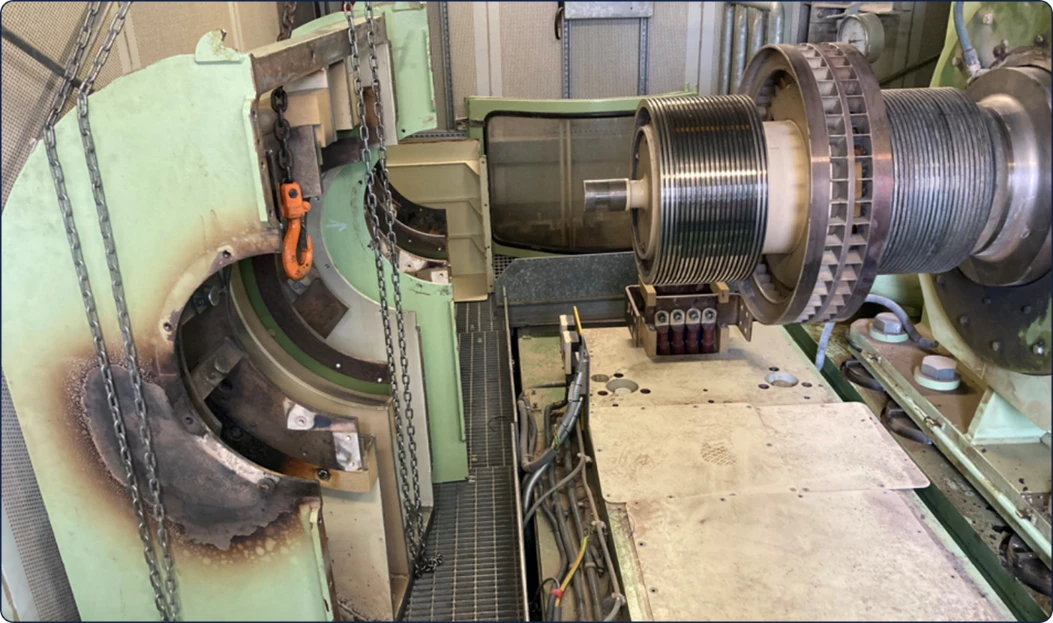
Working closely with a skilled colleague, we immediately began a thorough root cause investigation. We disassembled the collector ring assembly under controlled conditions and conducted a detailed inspection of the rings, brushes, brush holders, and associated insulation. Our analysis confirmed that the failure resulted from a combination of:
This multi-factor failure mode had created a destructive cycle of arcing, carbon tracking, and eventual flashover. The discovery allowed us to shift from simple component replacement to a comprehensive remediation plan.
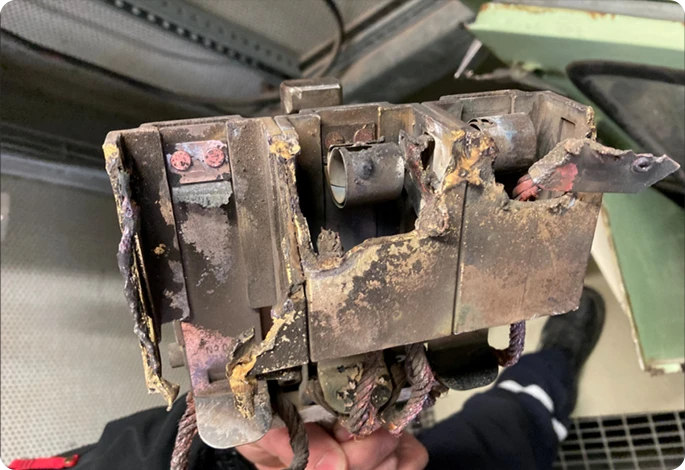
With the root causes clearly identified, we developed and executed a full recovery plan:
Every step was carefully documented with photos and measurements to support future maintenance planning.
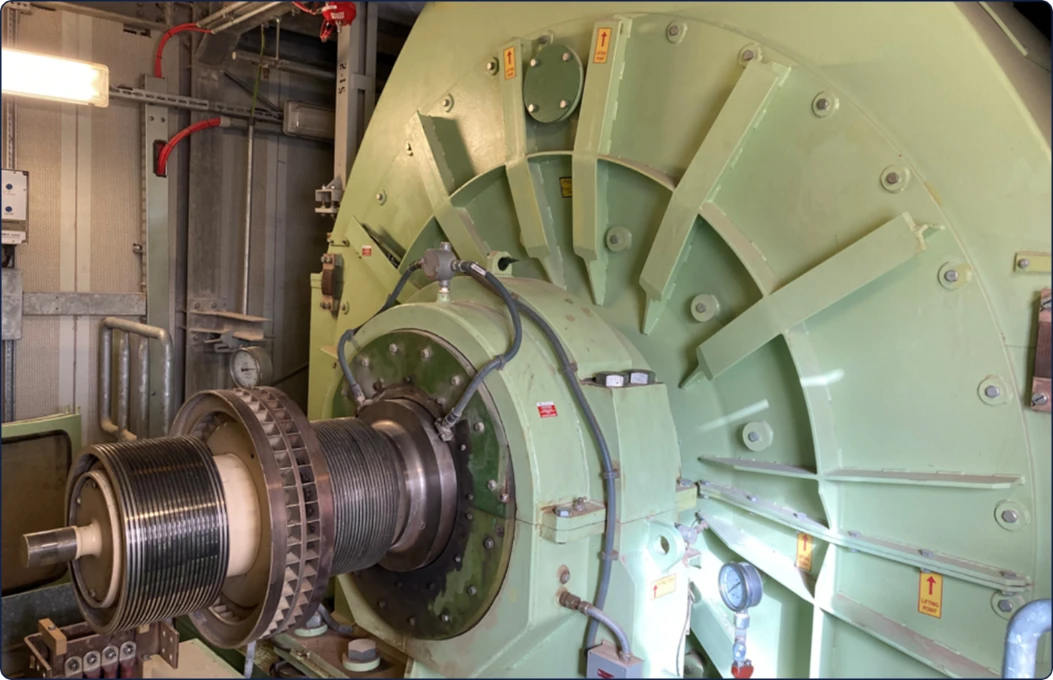
The failed unit was successfully reassembled, tested, and returned to service. Following comprehensive no-load and loaded testing, the generator was synchronized to the 400 kV regional power grid without issue. The turbine has since operated reliably, restoring full combined-cycle output for the oilfield power station. Operations and maintenance teams were highly satisfied with both the technical outcome and the speed of execution under challenging site conditions. The detailed documentation and lessons learned from this event have been incorporated into the operator’s maintenance strategy to help prevent recurrence across the other three Alstom units.
This project demonstrated the ability to deliver high-impact results in one of the most demanding and dangerous environments on earth — combining strong technical expertise, practical field skills, and the composure required to operate successfully in a high-security, high-pressure setting. One of Generex’s core values that shined the most here was COURAGE to take a project in a place with a very real possibility of violent death.