Field Ground Detection & Rotor Ground Fault Troubleshooting
INTRODUCTION
Field ground detection and rotor ground fault troubleshooting are essential aspects of maintaining the integrity of large utility turbine-driven synchronous generators. The rotor field winding operates as an ungrounded DC circuit, making a single ground fault initially tolerable but highly dangerous if a second ground develops. Early detection prevents severe rotor damage, vibration, thermal imbalance, and potential catastrophic failure involving the rotor forging or bearings. For consulting firms specializing in generator testing, inspection, and repair, proficiency in field ground protection schemes, fault location techniques, and corrective actions enables utilities to minimize downtime, extend rotor life, and avoid multimillion-dollar repairs or replacements. This article provides a practical guide to the principles, detection methods, maintenance practices, common issues, and troubleshooting strategies for rotor field ground faults in utility-scale machines.
BACKGROUND
In large turbine-driven generators (typically 100 MW and above), the rotor field winding carries high DC excitation current to produce the rotating magnetic field. The field circuit is intentionally ungrounded to limit fault current and allow continued operation with a single ground fault. However, insulation degradation over decades of service—driven by thermal cycling, centrifugal forces, vibration, contamination, or mechanical wear—can create a low-resistance path to the rotor body. A first ground fault establishes a reference to ground, increasing voltage stress across the remaining insulation. A second ground fault shorts out a portion of the winding, producing unbalanced magnetic flux, rotor heating, vibration, and possible mechanical damage. Modern protection schemes provide sensitive detection with alarm and trip thresholds, while advanced troubleshooting methods help locate faults efficiently during outages. Proactive management of rotor ground faults is critical for reliability, especially in aging fleets operating under increased cyclic duty.
PRINCIPLES OF OPERATION
The rotor field circuit is a high-inductance DC winding insulated from the grounded rotor forging. Under normal conditions, insulation resistance to ground remains very high (typically greater than 100 kΩ). Field ground detection schemes monitor this insulation resistance continuously or periodically. Traditional DC injection methods apply a low DC voltage (or bias) between the field circuit and ground (often referenced through the shaft grounding brush) and measure leakage current. Any reduction in insulation resistance increases current flow, triggering an alarm (e.g., at 20–50 kΩ) or trip (e.g., at 5–10 kΩ). Modern AC or low-frequency injection schemes (0.1–1 Hz square wave or pulse) inject a signal and analyze the return waveform or calculated resistance.
These methods offer improved security against DC transients during field forcing or load changes and can detect high-impedance faults or grounding brush lift-off. Some systems provide continuous insulation resistance trending, functioning like an online megger test. When a second ground fault occurs, part of the winding is shorted, reducing effective turns and creating magnetic imbalance. This leads to unequal air-gap flux, torsional stresses, vibration, and localized heating. Protection relays (device 64F) must distinguish genuine faults from noise while coordinating with loss-of-field (40) and other elements. Accurate detection relies on proper coupling networks and compensation for field winding capacitance.
MAINTENANCE PROCEDURES
Effective field ground detection maintenance combines online monitoring with offline testing during outages:
- Online Monitoring — Review trend data from the 64F relay for insulation resistance, alarm history, and any sudden drops. Check grounding brush condition and carbon dust accumulation.
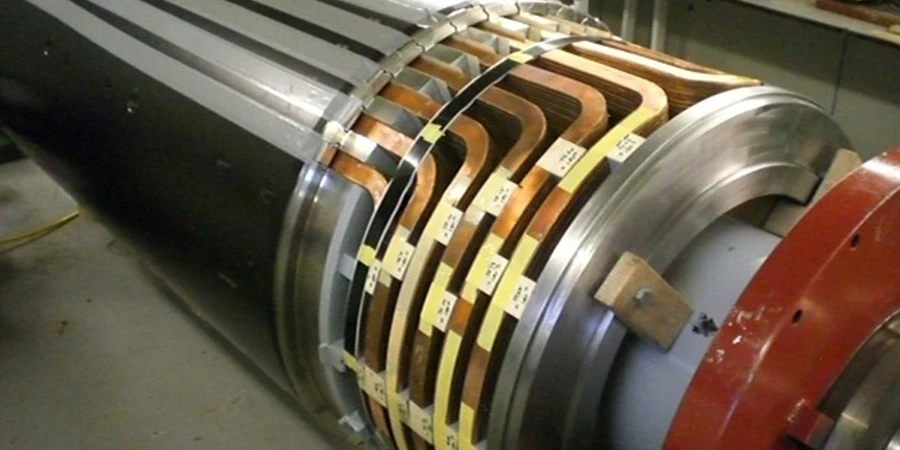
- Visual Inspection — During rotor removal or access, examine slip rings (static systems), collector rings, brush rigging, exciter diodes (brushless), and visible winding surfaces for contamination, abrasion, or carbon tracking.
- Insulation Resistance Testing — Perform DC megger tests (typically 500–1000 V) from field winding to rotor body with the excitation system isolated. Record temperature-corrected values and compare them to baseline and previous-outage results.
- Functional Testing of 64F Relay — Use secondary injection or manufacturer test sets to verify alarm and trip thresholds, response time, and security against transients.
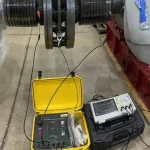
- Advanced Troubleshooting — If a ground is indicated, use Recurrent Surge Oscillography (RSO) testing to locate inter-turn shorts or ground faults by comparing waveform reflections from both ends of the winding. Flux probe testing (if installed) can detect current-carrying shorted turns online.
- Cleaning and Preventive Measures — Remove oil, carbon dust, or moisture; inspect and replace grounding brushes; verify shaft grounding system integrity.
These procedures are recommended every 2–4 years or upon any ground fault alarm. Digital systems often allow partial online diagnostics, reducing outage scope.
Our engineers identify the true root cause of equipment failures, and help prevent future events
Why Did Your Unit
Suddenly Trip?
REPAIR SCENARIOS
Repair scope is driven by fault location, severity, and insulation condition:
- Minor — High-resistance ground due to surface contamination or minor abrasion: thorough cleaning, drying, and application of compatible insulating varnish or coatings (1–3 days).
- Moderate — Localized insulation damage or single ground fault with accessible location: localized re-insulation, replacement of damaged creepage blocks or slot armor, and re-blocking (3–7 days in shop or on-site).
- Major — Low-resistance ground, widespread degradation, or second ground fault causing shorted turns and rotor imbalance: partial or full rotor field rewind, retaining ring inspection, and comprehensive NDT of the rotor forging (4–12+ weeks). In severe cases, rotor replacement may be required due to long lead times for new forgings. Post-repair verification includes insulation resistance, RSO testing, hipot (where appropriate), and functional 64F testing. All materials must match or exceed the original Class F (or higher) insulation system.
COMMON ISSUES AND REMEDIES
Common causes of rotor ground faults include thermal aging of insulation, contamination from oil migration past seals or carbon dust from brushes, mechanical abrasion from vibration or centrifugal forces, moisture ingress, and copper creep or distortion under repeated thermal cycling. In brushless systems, diode wheel or exciter winding issues can contribute; in static systems, slip-ring and brush problems are frequent. A single high-impedance ground often presents as a gradual decline in insulation resistance. Low-resistance or sudden grounds may indicate severe damage. Second grounds cause rapid vibration increases, thermal sensitivity, and possible pole slipping. Remedies include:
- Immediate investigation of any 64F alarm—do not ignore or disable the relay.
- Cleaning and drying the rotor to restore insulation resistance.
- Installing or upgrading to modern AC-injection 64F relays for better security and trending.
- Improving seal systems to prevent oil ingress and enhancing ventilation or filtering to reduce contamination.
- Adding redundant grounding brushes or monitoring brush lift-off.
If a ground persists, perform RSO testing to pinpoint the location (often under retaining rings or in slot regions) before deciding on repair scope. Early intervention frequently prevents progression to a second ground and major damage.
IEEE & ANSI DOCUMENTATION
IEEE Std C37.102 (Guide for AC Generator Protection) provides detailed guidance on rotor/field ground fault protection (64F), recommending sensitive detection schemes with alarm and trip settings to prevent damage from second grounds. It emphasizes coordination with loss-of-field and other protective functions. IEEE Std C37.101 (Guide for Generator Ground Protection) focuses primarily on stator grounding but offers context for overall machine protection.
Additional references include the IEEE Tutorial on the Protection of Synchronous Generators and manufacturer application guides for specific 64F implementations. Thorough documentation—recording insulation resistance trends, relay settings, event reports, RSO waveforms, as-found/as-left test data, and maintenance history—is essential for NERC compliance (PRC standards), root-cause analysis, insurance requirements, and long-term rotor life assessment.
SUMMARY & CONCLUSIONS
Field ground detection, rotor ground fault troubleshooting, and timely repair are indispensable for the safe, reliable operation of large utility turbine-driven generators. A single rotor ground fault, while not immediately destructive, creates conditions that can rapidly lead to a second fault, unbalanced magnetic forces, vibration, and severe mechanical or thermal damage. Modern DC or low-frequency AC injection schemes (device 64F), combined with offline insulation resistance testing and advanced tools such as RSO for fault location, enable early warning and precise diagnosis.
Adherence to IEEE C37.102 guidelines, rigorous maintenance procedures, meticulous documentation, and prompt corrective actions—from cleaning and localized repairs to full rotor rewinds—minimize outage duration and prevent catastrophic failures. For utilities managing aging generators under demanding grid conditions, investing in expert inspection, testing, and repair services for rotor field ground issues delivers substantial returns through enhanced reliability, reduced forced outages, and extended asset life. Implementing the practices outlined here strengthens overall generator protection and supports proactive asset management strategies.

About the Author
Charles J. Wolfe is the Founder and Principal Engineer of Generex Consulting, with over 30 years of global experience in power generation. He is a recognized expert in generator and excitation systems, trusted by clients worldwide for solving complex engineering challenges.